Manual desk review vs automated flood triage: what changes in week one after a storm
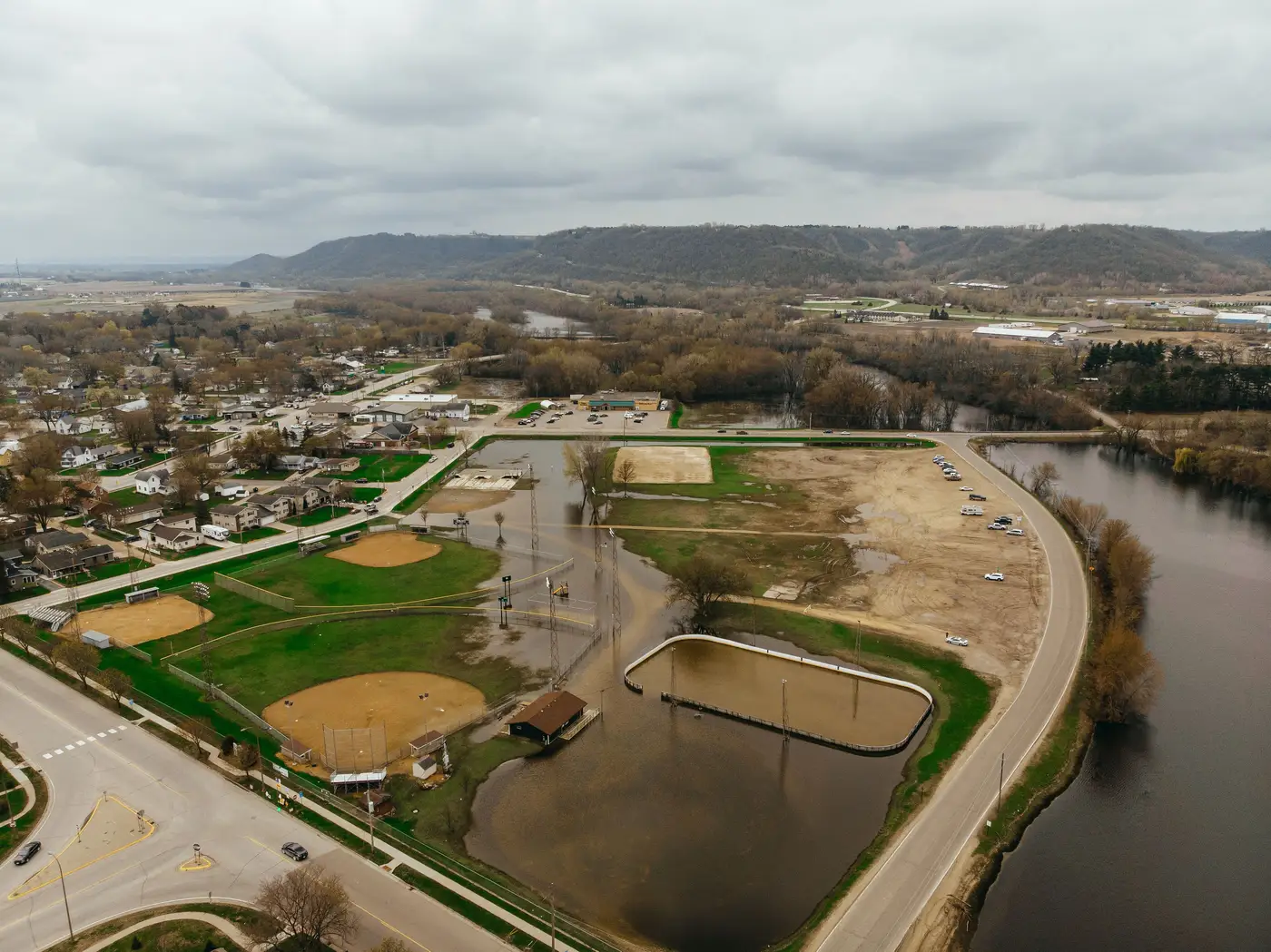
The first week after a flood event has a shape most claims ops leads could draw from memory. FNOL volume spikes on day one, keeps climbing through day three, and by day five you're staring at a queue that doesn't match your adjuster headcount no matter how you slice territories. Desk review is the default way to work through that queue, and it's worth being honest about what it involves before comparing it to anything else.
What desk review looks like on a flood book
A desk reviewer pulls each claim, checks the address against whatever public information exists: news footage, gauge readings from the nearest USGS station, maybe a community Facebook post with a photo of a flooded intersection. None of that is built for claims work. Gauge data tells you river stage at one point on the river; a tributary three miles upstream can crest and flood independently of that single reading. News crews shoot the worst-hit blocks, which means your reviewer has strong information on twelve addresses and nothing on the other four hundred. So the reviewer makes a judgment call, flags the file either way, and moves to the next one.
Multiply that by a thousand claims and this is what week one looks like for the whole book: reviewers burn the first two or three days just getting through the obvious cases, adjusters get dispatched based on partial information, and the clearly-dry claims sitting twenty miles from the flood zone wait in the same queue as the ones that need a field visit. Nobody's cutting corners. There just isn't a single source that shows the water extent against your whole exposure file at once.
What changes when imagery triage runs first
Satellite imagery pulled as soon as skies clear gives you one layer: where the water sat, as a polygon, not a narrative pieced together from news clips and gauge reports. Intersect that against your exposure file and the book splits itself. Addresses clearly outside the water extent get fast-tracked toward a pay decision without a manual look at each one. Addresses inside the polygon, or close enough to the edge that it's ambiguous, route to an adjuster with the mapped water extent already attached to the file.
That reordering is the whole difference. Desk review still happens, but on a fraction of the book, and the reviewer isn't starting from a blank address and a gauge report. They're starting from a map that already answers the first question: was this property in the water or not. Day one of the event, instead of day three or four, you have a ranked list instead of a flat queue.
Where this saves time in week one
The time saved comes from the files that never needed a human look, pulled out of the queue before a reviewer opens them. A thousand-claim book after a regional flood event typically has a wide band of addresses nowhere near the water. Running those through the same desk review process as the properties that flooded is where the week-one backlog builds up. Pull that band out at the start and your adjusters spend their days on the properties where a site visit is warranted, and your desk reviewers aren't triaging claims that could have been fast-tracked on day one.
This doesn't replace adjuster judgment on the properties that need it. Basement intrusion, backup from storm sewers, and wind-driven damage mixed in with flood all still need eyes on the file and the policy. What it replaces is the manual pass through every single address against news photos and gauge reports just to find out which claims belong in that pile in the first place.
The short version
Desk review works address by address against incomplete public information. Imagery-based triage intersects the water extent against your whole book at once, splits it into fast-track and adjuster-routed piles, and hands the adjuster a map instead of a blank file. Flood Extent Mapping builds that intersection from high-resolution imagery pulled right after the event, so the triage list exists before your desk reviewers finish their coffee on day one.
If your claims ops team is staring down a storm-hit book this season, it's worth seeing what a ranked triage list looks like before the manual review queue builds up.